For Schools
What is Counselling?
Understanding what counselling is, why experience matters, and what the evidence says about its impact on children and young people.
Different Types of Counselling — and
Why They Matter
Counselling is a broad term, and it’s worth taking a moment to understand what it actually means — especially when it comes to children and young people.
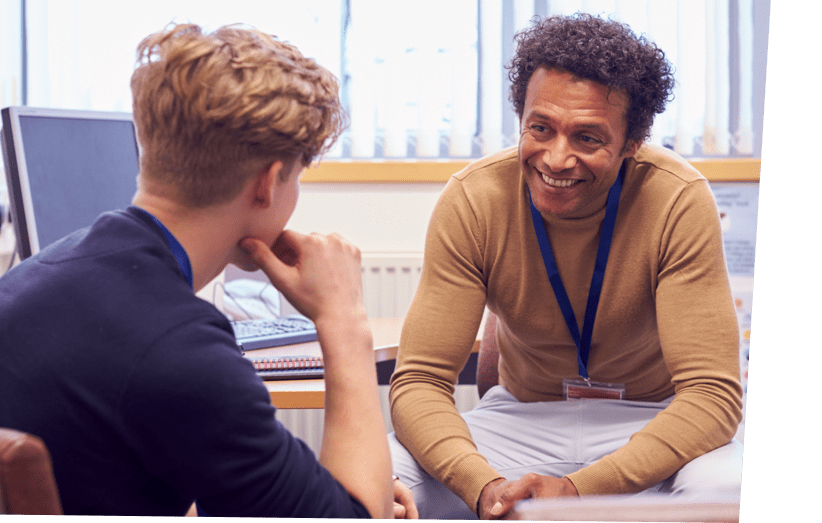
At its heart, counselling is a structured, confidential relationship between a trained professional and an individual, designed to support that person in understanding and challenging their thoughts and feelings, developing healthier ways of coping, and moving forward with greater confidence and resilience. For children and young people, it can be genuinely life-changing — providing a space where they feel heard, perhaps for the first time, and where the noise and pressure of daily life is temporarily set aside, enabling the thinking and reflection required for lasting personal growth.
Counselling and psychotherapy: what’s the difference?
The terms counselling and psychotherapy are often used interchangeably, but there are meaningful distinctions. Psychotherapy tends to be longer-term and explores deeper psychological patterns — looking at how early experiences have shaped the way a person thinks, feels, and relates to the world. Counselling is typically more focused, addressing specific challenges or difficulties a person is facing in the present. Both have an important role to play, and in practice, skilled practitioners often draw on elements of both.
What matters most for children in a school setting is that the approach is relational, age-appropriate, and responsive to what that individual child brings. A good school-based counsellor will adapt their methods to the child in front of them — sometimes using straightforward conversation, sometimes drawing on creative or play-based techniques that allow younger children to express what they can’t yet put into words.
Approaches you might hear about
There are many therapeutic frameworks a counsellor might draw on. Some of the most widely used include:
Person-centred counselling — which places the child at the centre, trusting in their capacity to find their own way forward when given the right conditions of warmth, empathy, and unconditional positive regard.
Cognitive behavioural approaches — which help children recognise unhelpful patterns of thinking and develop more constructive responses to difficult situations.
Integrative counselling — where the practitioner draws on a range of approaches, tailoring the work to the needs of the individual rather than applying a single fixed model.
Play and creative therapies — particularly valuable for younger children, using art, storytelling, or imaginative play as a route into feelings that are hard to articulate.
At the Valley Trust, our counsellors are experienced practitioners who understand how to work flexibly and responsively within a school environment. They know that the child sitting in front of them may be anxious, uncertain, or reluctant — and they have the skill to meet that child wherever they are.
Why We Don’t Use Counsellors Who Are Still in Training
This is a question we’re sometimes asked, and we think it deserves a straightforward answer.
The Valley Trust works exclusively with qualified, experienced counsellors — practitioners with a minimum of five years’ post-qualification experience and full membership of a recognised professional body. We do not place trainee counsellors or those still building their supervised hours in our schools. This is not a reflection on the quality or commitment of trainees — everyone begins somewhere, and today’s trainees will become tomorrow’s excellent practitioners. But when it comes to the vulnerable children in our care, experience is essential.
To explain why, we find an analogy from a very different profession rather useful.
The students who come to Valley Trust counsellors are often in genuinely vulnerable places. They may be experiencing trauma, significant family difficulties, or acute emotional distress. They deserve a practitioner who can hold that with confidence — someone who has sat with complexity before, who knows how to respond when a session takes an unexpected turn, and who can do so without flinching.
That is the standard we hold ourselves to, and it is why schools trust us to make the right match. When you bring in a Valley Trust counsellor, you’re not taking a chance. You’re choosing someone who has earned their place in that room.
Working with a trainee counsellor is rather like flying with a trainee pilot who is still building their flying hours. Both have a foundational understanding, a keen willingness to learn, and are guided by theory and supervision — but may lack the depth of instinct and confidence that only comes from years of experience.
When a difficult moment arises mid-flight, a trainee pilot may need to consult their checklist, seek guidance, or pause before acting — entirely understandable, but not ideal when decisions need to be made quickly. A fledgling counsellor facing a complex emotional crisis faces a similar challenge: the knowledge is there, but the instinctive, practised response takes time to develop.
By contrast, the seasoned pilot draws on years of experience to respond calmly and decisively, often knowing intuitively what the situation demands. The expert counsellor does the same — navigating difficult therapeutic moments with steadiness and skill, offering exactly the right level of support, even when the territory is unpredictable
The Evidence
The Evidence: The Case for Counselling in Schools
Counselling in schools is not a new idea — but the evidence base for its impact has never been stronger. A growing body of research consistently demonstrates that access to a qualified counsellor in school makes a measurable difference to children’s lives.
What the research tells us
Studies show that children who receive school-based counselling experience significant improvements across a range of areas: reduced anxiety and depression, stronger coping strategies, better engagement in the classroom, and healthier relationships with both peers and teachers. These are not marginal gains — they represent real, lasting change in how children experience themselves and the world around them.
Research published by the British Association for Counselling and Psychotherapy (BACP) found that pupils who engaged in school-based counselling showed measurably lower levels of psychological distress and were better equipped to manage the everyday pressures of school life. Evaluations consistently point to improved attendance, greater classroom participation, and higher attainment, particularly among those facing emotional or psychological barriers to learning.
The ‘missing middle’
One of the most important findings to emerge from recent research is the existence of what the BACP and Citizens UK, in their joint report ‘The Case for Counselling in Schools and Colleges’, describe as the ‘missing middle’: children and young people whose needs are too complex for general pastoral support, but who don’t meet the threshold for CAMHS (Child and Adolescent Mental Health Services).
These are children who are struggling — sometimes significantly — but who fall through the gaps in existing provision. School-based counselling is uniquely placed to reach them. It is accessible, delivered in a familiar setting, and does not carry the stigma that can sometimes be associated with formal mental health services. For many children, a school counsellor is the first trusted adult outside their immediate family they have ever spoken to honestly.
Why early intervention changes outcomes
The evidence is also clear that timing matters. The earlier a child receives support, the better their long-term outcomes are likely to be. Emotional difficulties that go unaddressed in childhood rarely resolve on their own — they tend to deepen, affecting academic performance, relationships, and eventually adult mental health and wellbeing.
Early intervention through school-based counselling interrupts that trajectory. It gives children the tools to understand and manage their emotions before those difficulties become entrenched. It builds resilience at exactly the age when resilience is most formative. And it does so in a setting that is already part of a child’s daily life, removing the barriers that might otherwise prevent them from accessing support at all.
At the Valley Trust, we have seen this play out in the lives of thousands of children over nearly four decades. The evidence aligns with our experience: counselling in schools works. The question is not whether to provide it, but how to provide it well.